Quick Answer
Board and care homes in Los Angeles are small, private residences offering a home-like setting for 6-10 seniors, providing a high caregiver-to-resident ratio and lower costs. Assisted living facilities are large communities with 50-200+ residents, offering extensive amenities, social activities, and more on-site medical support. The best choice depends on your parent's need for social engagement versus a quiet environment.
Board and care homes are one of the most overlooked options in Los Angeles elder care. They offer a smaller, more personal environment than large assisted living facilities — often at significantly lower cost. For families who need more care than home care can provide but want to avoid the institutional feel of a large facility, they are worth understanding.
The reality is that the best choice depends entirely on your family's specific needs, your parent's health, and their personality. While both options provide essential support, understanding their fundamental differences is the first step to avoiding costly mistakes. In most cases, one option is a significantly better fit, and knowing when to act can prevent future crises, especially if you are already seeing the 7 signs it's time for assisted living.
What Board and Care Homes Are
Wanting help does not mean you failed. It means the situation has changed in ways that one person — or one family — can't fully manage alone.
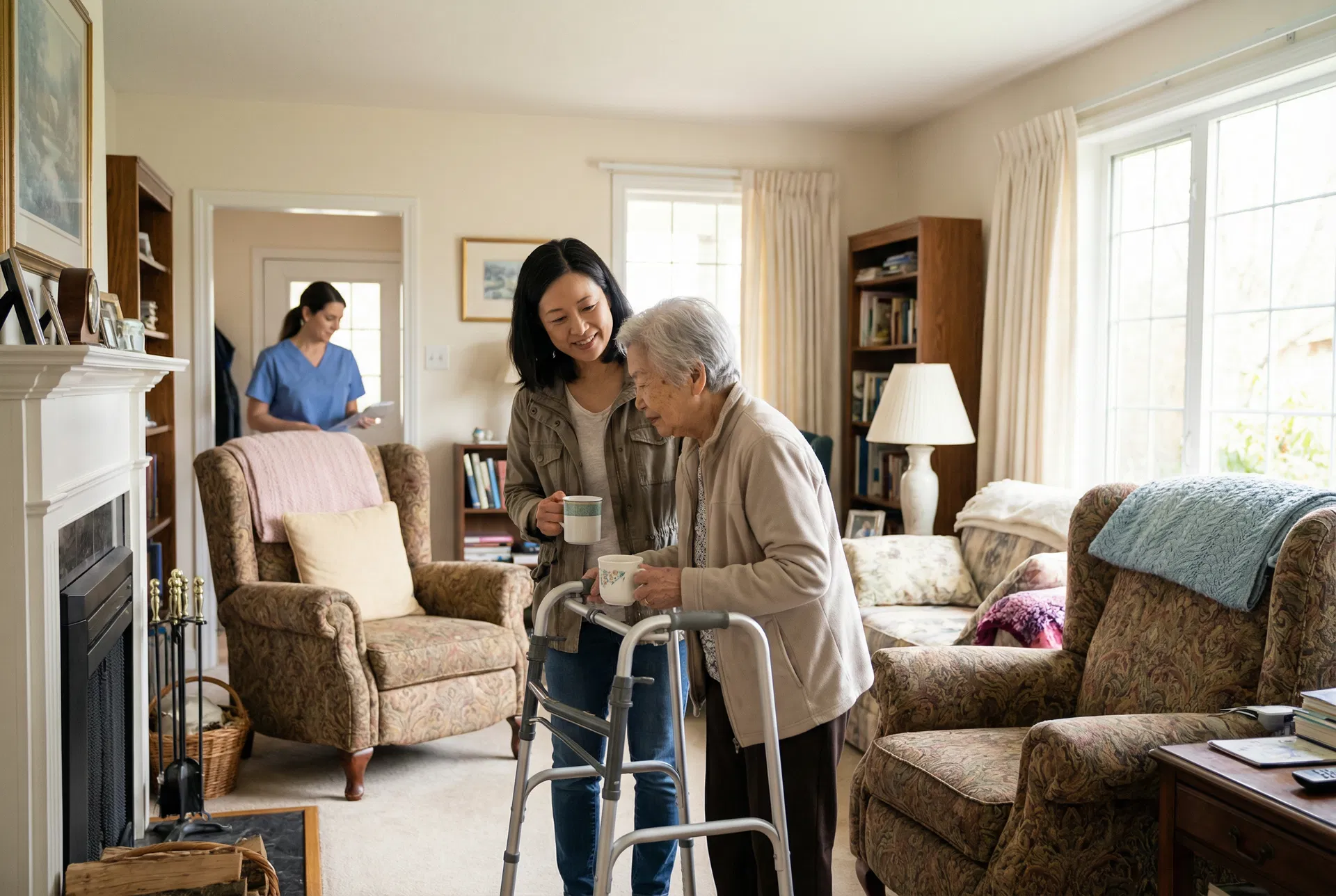
Board and care homes, officially known in California as Residential Care Facilities for the Elderly (RCFEs), are small, private homes licensed to provide care for older adults. They are fundamentally different from larger institutions. Families often make the mistake of overlooking them, but for many seniors, they are the ideal solution.
Key characteristics include:
- Small, Intimate Setting: Typically houses 6 to 10 residents in a converted single-family home, creating a true home-like feel.
- Personal Environment: Features familiar furniture, shared family-style meals, and a much quieter atmosphere than a large facility.
- Consistent Caregivers: The small scale means residents and caregivers develop close, trusting relationships. This is a major advantage over the rotating staff shifts in larger communities.
- Often Privately Run: Many are operated by a dedicated owner or family, providing a personal touch and direct accountability.
Need help with this right now?
We help families compare board and care vs assisted living and find available options in Los Angeles.
Get Help Understanding Your OptionsKey Differences: Board & Care vs. Assisted Living
Understanding the distinctions is crucial. What works best is matching the environment to your parent's needs. For some, the robust social life of assisted living is perfect; for others, especially those with anxiety or the early signs of dementia, the quiet of a board and care is far better.
| Factor | Board and Care | Assisted Living |
|---|---|---|
| Size & Scale | 6–10 residents | 50–200+ residents |
| Environment | Quiet, home-like, residential | Active, community with amenities |
| Staffing Ratio | Higher (e.g., 1:3 or 1:4) | Lower (e.g., 1:8 or 1:12) |
| Social Life | Minimal, informal programming | Structured activities & social events |
| Cost (LA, 2026) | $3,000–$6,000/month | $3,500–$7,500+/month |
| Medical Oversight | Visiting professionals, limited on-site | On-site nursing often available |
Pros and Cons: A Head-to-Head Comparison
The reality is, neither option is universally "better"—it's about finding the right fit. A common mistake families make is choosing based on amenities rather than the actual care and environment their parent needs. This is a crucial distinction when considering the assisted living vs in-home care debate as well.
Board and Care
Pros
- More personal attention due to high staff-to-resident ratio
- Often a lower monthly cost
- Quiet, calm, and comfortable home-like atmosphere
- Excellent for residents who are introverted or easily overwhelmed
- Flexible and customized care plans are common
Cons
- Limited social activities and amenities (no pools, gyms, etc.)
- Fewer on-site medical services; relies on visiting professionals
- Less privacy, as residents often share rooms and bathrooms
- May not be ideal for highly social and active seniors
Assisted Living
Pros
- Wide range of social, recreational, and educational activities
- Resort-style amenities like pools, salons, and movie theaters
- Private apartments with kitchenettes are standard
- On-site nursing staff and coordination with medical providers
- Great for outgoing seniors who want an active social life
Cons
- Higher monthly cost, with many fees for extra services
- Can be overwhelming for shy or anxious individuals
- Lower staff-to-resident ratio can mean less personal attention
- Impersonal, institutional feel compared to a real home
When You Need to Act Now
Sometimes, the decision can't wait. If your parent's safety is at immediate risk, you must act decisively. This is no longer a casual choice when you observe issues like repeated falls, medication errors, significant weight loss, or dangerous behaviors like leaving the stove on or wandering. In these crisis situations, the priority is to secure a safe environment immediately. Don't delay hoping things will improve on their own. The reality is, these situations often escalate quickly, and waiting too long for assisted living can lead to a hospital stay, making the transition even more difficult.
Key Takeaways
- ✓Environment is Key: Choose a board and care home for a quiet, intimate setting or an assisted living facility for a vibrant, social community.
- ✓Staffing Matters: Board and care homes offer a higher staff-to-resident ratio, leading to more personalized attention.
- ✓Cost Differences: Board and care is generally more affordable, while assisted living costs more due to extensive amenities and services. Knowing how to pay for assisted living with no money can be critical.
- ✓Match to Personality: Don't just look at the amenities list. Consider your parent's personality—are they an introvert who would thrive in a calm home, or an extrovert who needs daily activities?
- ✓Check Licensing: Always verify the license of any RCFE (board and care home) or assisted living community on the California CDSS website before proceeding.
What to Do Next
- Assess Your Parent's Needs Honestly: Write down their specific daily care needs (ADLs), medical conditions, social preferences, and budget. This is the most critical step.
- Discuss the Options with Your Parent: If possible, involve them in the decision. Use our guide on how to talk to a parent about assisted living to frame the conversation productively.
- Tour Both Types of Facilities: Schedule tours at one board and care home and one assisted living community in your target area to feel the difference firsthand.
- Prepare Your Financial Plan: Determine your budget and explore all options, including savings, long-term care insurance, and potential benefits like VA Aid and Attendance.
- Get a Professional Assessment: Use our free service to find a local advisor who can provide a personalized list of vetted options in Los Angeles that fit your exact needs and budget.
Stop Guessing. Start Choosing.
Choosing between board and care and assisted living is a major decision. Our local LA advisors provide clarity, comparing vetted options side-by-side so you can make the right choice with confidence. The service is 100% free for families.
Get Help Understanding Your OptionsFrequently Asked Questions
Other guides families have found useful:
- How to Pay for Assisted Living When You Think You Can't Afford It
- Hidden Costs of Assisted Living (What Facilities Don't Tell You)
- 7 Signs It's Time for Assisted Living (Most Families Wait Too Long)
- How to Choose the Right Assisted Living Facility (Before It's Too Late)
- Assisted Living vs Memory Care: What Most Families Get Wrong
If you want help making the right care decision for your parent, you can start with a quick care assessment.
Start a Free Care AssessmentEven early research can help reduce stress later. There is no pressure or obligation.